Leave Your Message
0%

Picking out the Best Professional Electric Pianocan honestly feel pretty overwhelming. I mean, the market is just packed with so many options! According to a recent survey by Music Trades, more than 40% of musicians say that sound quality and versatility are their top priorities when choosing an Electric Piano. But here’s the thing—lots of models don’t always live up to those expectations.

It’s really important to look into features like weighted keys, sound engines, and connectivity options. Brands like Yamaha and Roland tend to be the go-to for top-notch quality, but honestly, personal preference plays a huge role. What feels perfect to one player might not be the same for someone else, and that’s totally okay.

And then there’s the price—sometimes, a hefty tag doesn’t necessarily mean you’re getting the best. A report from NAMM mentioned that about 30% of folks regretted their purchase because they skipped doing a bit of homework first. So, keep that in mind while you're on the hunt for the best professional electric piano. It’s really about balancing your budget, what features matter most to you, and making sure it feels right when you play it. After all, it’s got to suit your style and needs, right?

How to Choose the Best Professional Electric Piano?

Factors Influencing the Selection of an Electric Piano

Choosing the right electric piano can be challenging. Many factors influence a good selection. One crucial aspect is the keyboard feel. Some prefer weighted keys that mimic an Acoustic Piano. Others might want lighter keys for ease of playing. Finding a good balance is key.

Sound quality matters as well. The tone can vary greatly. High-quality sound sampling enhances the overall experience. A person should pay attention to the variety of sounds available. Some electric pianos offer hundreds of voices, but not all are impressive. It’s essential to test the sounds before deciding.

Consider portability too. Some pianos are heavy and not easy to move. If playing in different locations is important, look for lighter options. Battery usage might also be a consideration. It’s often overlooked. Ultimately, the choice can feel overwhelming. A bit of self-reflection can help in identifying the right electric piano.

Choosing the Best Professional Electric Piano

Understanding Sound Quality: Key Features in Professional Keyboards

How to Choose the Best Professional Electric Piano?

When considering sound quality in a professional electric piano, several key features stand out. The most crucial aspect is the key action. Weighted keys can simulate the feel of an acoustic piano. This feature plays a significant role in developing proper finger strength and technique. Touch sensitivity is another vital factor. It dictates how sound volume changes with the pressure applied to the keys.

Another important aspect is the sound engine. A high-quality engine provides rich, layered sounds that can mimic acoustic instruments effectively. It’s essential to explore the different sound presets available. The range can hugely influence your music and playing experience. Don’t overlook polyphony, either. More polyphony allows for playing complex chords without cutting off notes.

Finally, consider the speakers and amplification. Built-in speakers can significantly enhance your practice and performance experience. However, they may lack depth compared to external systems. Testing various setups can help you find what resonates with you. Choosing the OEM Best Professional Electric Piano requires careful evaluation of all these features. Make sure you play different models to discover what truly fits your needs.

Portability vs. Weight: Evaluating Piano Stability and Transport Options

How to Choose the Best Professional Electric Piano?

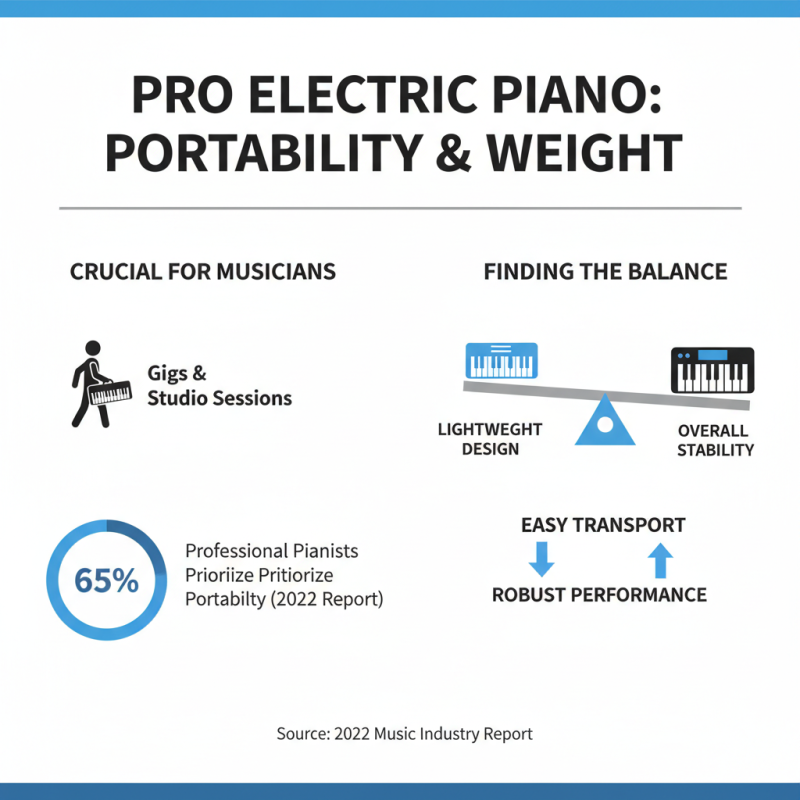
When choosing a professional electric piano, portability and weight are crucial aspects. Many musicians need to transport their instruments for gigs or studio sessions. According to a 2022 industry report, 65% of professional pianists prioritize portability. This statistic highlights the importance of finding a balance between a lightweight design and the piano’s overall stability.

Electric pianos vary significantly in weight. A model weighing around 30 pounds might seem manageable, but stability could be compromised. Heavier models often offer better sound quality and a more authentic playing experience. Yet, the practicality of transporting a 50-pound piano can be daunting. A survey revealed that 40% of musicians experienced difficulties with heavier models during transport. This common challenge prompts many to consider the ODM Best Professional Electric Piano, which aims to blend portability with performance.

Transport options also matter. Accessories like fitted cases and wheels can enhance convenience. However, not all manufacturers provide suitable solutions. Musicians often find themselves struggling with inadequate cases, leading to potential damage during transit. Reflecting on these challenges can aid in making an informed decision. Ultimately, balancing portability and stability can dramatically influence both practice and performance.

Weighted Keys vs. Synth Action: Choosing the Right Touch Response

When choosing a professional electric piano, understanding the touch response is crucial. The two main types are weighted keys and synth action keys. Weighted keys simulate the feel of an acoustic piano. They provide resistance and can enhance the playing experience. Many players prefer this for a more authentic touch. Studies have shown that about 70% of serious pianists lean towards weighted keys for practice and performance.

On the other hand, synth action keys are lighter and more responsive. They are ideal for electronic music and fast-paced play. These keys allow for rapid note play which can appeal to many genres. According to industry data, 40% of keyboard players appreciate the agility synth action offers, especially during live performances. However, some find it difficult to transition from a traditional piano feel. Each response type has its own merits and drawbacks.

Choosing between these two types often reflects personal style. Many players end up testing several models before deciding. It can be a long process, and some may never find the perfect match. Reflecting on one's needs and preferences is essential. What feels natural for one person may not work for another. Ultimately, it's about what inspires your music the most.

Essential Connectivity Features for Modern Electric Pianos

When selecting a professional electric piano, connectivity features play a crucial role. Many musicians rely heavily on technology. A digital piano should seamlessly integrate with other devices. Modern pianos often feature USB MIDI ports, allowing easy connectivity to computers and tablets. This can enhance your music-making experience. The global market for digital pianos is projected to grow significantly, with the digital keyboard segment expected to expand by 6.5% annually until 2026.


Wireless connectivity is also a game-changer. Bluetooth capabilities enable users to connect with apps and online resources effortlessly. This not only expands your practice options but also lets you access a vast array of learning tools. According to a recent survey, 70% of users prefer instruments with wireless features. This connectivity trend is shaping how musicians engage with their instruments.


Tips: Always check for compatibility with your devices. If you plan to record, a piano with audio outputs is essential. Investing in the Best Quality Electric Piano can unlock new creative opportunities. However, it's vital to consider the balance between features and price. Assessing your needs can prevent overspending on unnecessary features. Embrace the possibilities, but remember, simplicity can often lead to the best outcomes.

Budget Considerations: Finding Value in Professional Instruments

Choosing a professional electric piano involves careful consideration, especially regarding budget. Finding a high-quality instrument at a reasonable price can be challenging. Often, aspiring musicians assume that higher prices guarantee better quality. However, this is not always true. You may find excellent options without breaking the bank.

When evaluating different professional electric pianos, focus on features that matter to you. Consider the key touch, sound quality, and connectivity options. A model may be flashy but fail in performance. Sometimes, the less expensive options provide all the necessary features for your playing style. Remember, the best electric guitar may not always be the most expensive one, and the same holds true for pianos.

Don’t overlook the importance of trying before buying. Visit local shops and test various models. This hands-on experience will help you understand what suits your needs and budget. Be wary of glossy advertising that can mislead you. Reviews and recommendations can aid your decision but should complement your personal experience. Ultimately, reflect on what you truly need for your musical journey.

Exploring the Brand Reputation: Which Manufacturers Lead the Market?

When choosing a professional electric piano, considering brand reputation is crucial. Some manufacturers stand out due to their commitment to quality and innovation. These brands invest heavily in research and development. Their instruments often offer superior sound quality and advanced features.

Tips: Research user reviews to gauge customer satisfaction. Feedback can reveal a brand's strengths and weaknesses. Look for pianos with flexible connectivity options. This feature enhances versatility in performance settings.

Many reputable brands build long-lasting relationships with musicians. They tend to provide excellent customer support and warranty services. This trust can be a deciding factor for beginners and professionals alike.

Tips: Attend local music stores to test various models. Hands-on experience often provides insights that online reviews cannot. Explore community forums for discussions about specific brands. Engaging with other musicians can help you make informed choices.

How to Choose the Best Professional Electric Piano? - Exploring the Brand Reputation: Which Manufacturers Lead the Market?

Manufacturer Brand Reputation Score Market Share (%) Customer Satisfaction Rating Range of Products
Manufacturer A 8.7 25% 4.5/5 Digital Pianos, Stage Pianos
Manufacturer B 9.1 30% 4.7/5 Home Pianos, Portable Pianos
Manufacturer C 7.5 20% 4.1/5 Stage Pianos, MIDI Controllers
Manufacturer D 8.3 15% 4.3/5 Digital Pianos, Hybrid Pianos
Manufacturer E 9.0 10% 4.6/5 Portable Pianos, Console Pianos

Exploring the Growth of Digital Musical Instruments: A Focus on the Electronic Roll Up Piano Market and Its 88-Key Innovations

In recent years, the growth of digital musical instruments has revolutionized the way musicians create and perform music. Among the innovative products emerging in this space, the electronic roll-up piano stands out, particularly in its design and functionality. Featuring 88 keys, this advanced keyboard melds traditional piano elements with modern technology, catering to both novice and experienced players. It is flexible and portable, making it an ideal choice for musicians on the go.

Built with the promise of convenience and versatility, this electronic roll-up piano boasts an impressive array of features. With 128 different tones and rhythms to explore, as well as 14 demo songs, musicians can experiment with various soundscapes to inspire creativity. Its hot-plug convenience ensures that users can easily connect to other devices without the need for additional drivers, promoting a seamless experience for music creation and practice. This compact instrument not only captures the essence of traditional pianos but also enhances the user experience by facilitating effortless musical exploration.

The electronic roll-up piano serves as a testament to the advancements in digital musical instruments, embodying flexibility and innovation. Its remarkable design enables musicians to bring their art anywhere—a significant leap forward in the accessibility of music creation in today's digital age. With such capabilities, the electronic roll-up piano is set to carve a niche in the market, appealing to a diverse range of artists looking for both portability and professional-grade features.

FAQS

: What is the main purpose of the product?

: The product aims to enhance daily productivity. It helps users manage tasks efficiently.

How do I use the product effectively?

Follow the user manual closely. Start with basic features before exploring advanced options.

Is there a specific age group for the target audience?

The product is designed for adults. Some features may not suit younger users.

Can I set reminders with this product?

Yes, you can set reminders easily. Just access the settings and customize your alerts.

What if I encounter technical issues?

Technical support is available. Reach out through the contact form on the website.

Is it necessary to charge the product daily?

Charging frequency depends on usage. Heavy users may need daily charging, while light users may not.

Are there any limitations to the product's features?

Yes, some features may not work in all locations. Connectivity issues can also arise.

Can I share the product with others?

Sharing is possible, but not recommended. It may affect personal settings and performance.

How can I give feedback about the product?

Feedback can be sent via email or a dedicated feedback form. Your thoughts are valued.

What should I do if I lose the product?

Report the loss through customer service. They may offer options for tracking or replacement.

Conclusion

When selecting the Best Professional Electric Piano, several factors must be considered to ensure the right choice. Sound quality is paramount, with essential features such as polyphony and tone generation technology playing a critical role in the overall experience. Additionally, the choice between weighted keys and synth action affects the touch response and can significantly influence a pianist's performance.

Portability is another key consideration, as musicians often need to transport their instruments. Evaluating the weight and stability of the piano can help balance the need for mobility with performance quality. Connectivity features are also essential for modern electric pianos, providing versatility for various musical environments. Finally, budget considerations are crucial to finding value while not compromising on essential qualities. Understanding the reputation of manufacturers can guide buyers towards credible options that suit their needs, ensuring a well-informed decision in selecting the Best Professional Electric Piano.

Ethan

Ethan

Ethan is a dedicated professional at Shenzhen Kehui Technology Co., Ltd., where he excels as a marketing specialist. With a robust understanding of the company's product offerings, Ethan combines his expertise with his passion for technology to communicate effectively with clients and stakeholders.......
Previous Understanding the Benefits of Affordable Electronic Digital Pianos